There is only 5 Abaco Wild Horses left in the Bahamas. Human intervention and a drastic change in habitat have taken a severe toll on this species. A herd that once had 200 horses now face extinction without anyone having an effort to save them. Out of all the once 200 animals, there is only 5 left! This is terrible, and I don't think they can survive much longer!!!!!!
"COROLLA — Wild Spanish Mustangs were dropped off on the Outer Banks centuries ago when the Spanish planned to colonize the islands. Today, a new management plan calls for thinning the herd from more than 100 down to just 60, and the horses face an uncertain future.
The wild horses of Corolla, also known as bankers, have survived in the Outer Banks for nearly 500 years. Now they face their toughest hurdle. The beaches where the Spanish Mustangs landed so long ago are now filling up with tourists.
“I’ve worked with horses a good part of my life,” said Steve Rogers of the Corolla Wild Horse Fund. “I’d say their biggest danger is us -- people.”
Rogers’ job is to educate the masses. He spends his summer days handing out brochures on the beaches and intercepting people trying to get to close to the animals.
“I just want to give you some information about the horses,” Rogers told a group of tourists. “You have to stay at least 50 feet away at all times and not feed them."
"Most of the folks who come here don’t know the rules," Rogers said.
Karen McCalpin, who runs the Corolla Wild Horse Fund, the group charged by the county to oversee and protect the horses, said the animals do not belong to anybody.
“They’re nobody’s horses,” she said. “They don’t belong to the Corolla Wild Horse Fund. They don’t belong to the county.”
McCalpin routinely has to remove injured horses from the herd. The injuries are often caused by humans.
“We’ve had six that were intentionally shot,” McCalpin said.
The horses roam 12,000 acres or 11 miles of the island. Much of that land is privately owned and those owners continue to build.
“There are about 300 houses in that area, but there are 3,080 platted lots.” McCalpin said. “And certainly if all those were to be built out, I don’t know how long people and wild horses can co-exist. Probably not another five centuries unless we do more careful thinking about how we develop the rest of the other banks.”
Rogers and McCalpin want to see horses, houses and humans all get along. They are glad to see people admiring the horses, but they do not want to see people love them to death.
Thursday, 9 June 2011

Wednesday, 8 June 2011
Titi Monkey :)
Titi Monkeys are a very new species, and they are already endangered! The reason they are becoming endangered is because people are cutting down the habitat (rain forests).They are not very big so they have a lot of predators to worry about. I hope we can save this new species because they are really cute, and I love monkeys!!!!!!!
Man Arrested After Smuggling Endangered Titi Monkeys

Kevin Schafer/CORBIS
Authorities performed a body search on Roberto Sol Cabrera Zavaleta because he was behaving “markedly nervous,” only to find that he was smuggling monkeys.
Yes, monkeys. Eighteen Titi monkeys, to be exact. Cabrera allegedly hid the animals, which are endangered, in pouches attached to a belt underneath his shirt after moving them from his suitcase. Two of the monkeys were dead after traveling from Lima, Peru.
Cabrera told authorities that he put the monkeys under his clothing “so the X-rays wouldn't hurt them.” He said he bought the animals for $30.
Now the real question is, where was he going?
Read more: http://newsfeed.time.com/2010/07/20/man-arrested-after-smuggling-endangered-titi-monkeys/#ixzz1Oh8OBjek
African Wild Ass!
The Wild Ass species is under no threat of extinction, but they are very critically endangered. These animals have been captured for domestication for many centuries, along with interbreeding between wild and domestic animals, it has caused a distinct decline in population. There are now only a few hundred individuals left in the world The Wild Ass is also hunted for food and traditional medicine in Ethiopia and Somalia. Competition with domestic livestock for grazing, restricted access to water supplies caused by agricultural developments pose further threats to the survival of the species. But the Wild Ass is legally protected in the countries where they are currently found.

There are about 150 individual Somali Wild Asses living in zoos around the globle of which 36 were born at Zoo Basel,[9] where this species's breeding program started with Basel's first Somali wild asses in 1970 and the first birth in 1972.[10]
Zoo Basel manages the European studbook for the Somali wild ass and coordinates the European Endangered Species Programme (EEP).[11] All European and American wild donkeys are either descendants of the original group at Zoo Basel or of 12 others that came from the Yotvata Hai-Bar Nature Reserve in Israel in 1972.

Zoo Basel manages the European studbook for the Somali wild ass and coordinates the European Endangered Species Programme (EEP).[11] All European and American wild donkeys are either descendants of the original group at Zoo Basel or of 12 others that came from the Yotvata Hai-Bar Nature Reserve in Israel in 1972.
Wednesday, 1 June 2011
Tiger
Wild tiger numbers are at an all-time low. The largest of all the big cats may be on top of the food chain and one of the most culturally important and best-loved animals, but they are also close to extinction. Tigers are forced to compete for space with dense human populations, face unrelenting pressure from poaching, retaliatory killings and habitat loss across their range.
We can save wild tigers. WWF has set a bold but achievable goal of Tx2: which means doubling the number of tigers in the wild by 2022, when the next Year of the Tiger is celebrated.
By saving tigers, we also save the biologically rich and diverse landscapes where they still roam — Asia’s last great rain forests, jungles and wild lands. These forests are home to thousands of other species, people and the food, freshwater and flood protection that local communities need to survive.
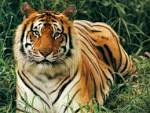

We can save wild tigers. WWF has set a bold but achievable goal of Tx2: which means doubling the number of tigers in the wild by 2022, when the next Year of the Tiger is celebrated.
By saving tigers, we also save the biologically rich and diverse landscapes where they still roam — Asia’s last great rain forests, jungles and wild lands. These forests are home to thousands of other species, people and the food, freshwater and flood protection that local communities need to survive.
Three tiger subspecies - the Bali, Javan, and Caspian - have become extinct in the past 70 years. The six remaining subspecies - Amur, Bengal, Indochinese, Malayan, South China, and Sumatran - live only in Asia, and all are threatened by poaching and habitat loss.


Subscribe to:
Posts (Atom)